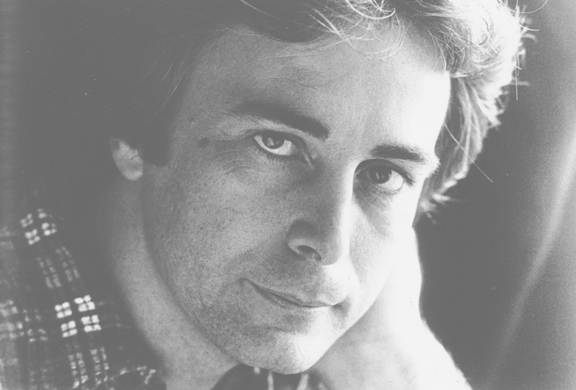
1999-2009: College Archivist, Special Collections; College Libraries; College of Charleston (Charleston, South Carolina). Faculty emeritus since 2009.
2001-2009: Adjunct Professor, Department of Art History, College of Charleston. Courses taught: Classic Tradition in Architecture, American Architecture, 20th Century Architecture, Introduction to Architecture.
1993-1996: Head, Collections Development, Library; Canadian Centre for Architecture (Montreal Quebec).
1985-1993: Associate Archivist, Archives of the History of Art (to 1991); Curatorial Associate, Special Collections (from 1991); Getty Center for the History of Art and the Humanities (Santa Monica, California).
1976-1984: Director, South Carolina Historical Society (Charleston, South Carolina).
1969-1975: Director, Florence Museum Florence, South Carolina).
I am an ethnohistorian and an architectural historian. I study primary sources and buildings to determine how architects designed and constructed some of the world's most permanent and influential buildings.Similarly, I use the best informed and least biased sources about prehistoric cultures when they were most nearly intact to reconstruct stages of human development. I organize information topically to facilitate making comparison and to enable readers to judge for themselves how well my conclusions correspond to all of the available evidence.
My principal ethnohistory compares three peoples who were separated from one another for at least 50,000 years in order to determine what they had in common before they separated.In nine volumes, I compared the Aborigines of Australia, the Bushmen of Africa, and the Fuegians of South America.I have also written three volumes to compare the Kikuyu and Massai to reconstruct prehistoric food production and two volumes on Olduvai and Gombe to reconstruct the development of Early Man from other types of primates.
My principal architectural studies are about the design and construction of the Pantheon and the Parthenon and the developments of Greek and Roman architecture. To reconstruct the development of a city, I wrote a two-volume study of architecture in Charleston, South Carolina. I also wrote three volumes summarizing the architectural development of Europe and its influence on the United States, two volumes onthe development and influence of Asian building types, and two volumes on the development of Greek Doric temples.
What my studies have in common is that they use primary sources to reconstruct how various aspects of cultures have developed. For example, in both ethnohistory and architecture, I consider comparable traits such as the types of materials used, how they were used, and their advantages and disadvantages.
I have degrees in English, art history, and architectural history.I have worked as a museum director, historical society director, and archivist. I have travelled to more than sixty countries to do research and writing and spent a total of six years in Europe, three years in Asia, and two years in the Southern Hemisphere.
Since 2009, I have devoted all my time to research and writing.I have made available my writings on demand to prevent alterations and to provide affordable editions.
M. A., Architecture (architectural history), UCLA . Merit fellowship.
B. A., Fine Arts (art and architectural history), College of Charleston.
B. S., English; College of Charleston.
2025C Vermeer. (568 pp.). Printed on demand; available through Amazon.com.
2025B Designing St. Peter's.(264 pp.). Printed on demand; available through Amazon.com Extracted from a volume on Renaissance Architecture with an additional on " Michelangelo's Barberini Faun" (pp. 220-249).
2025A John Bachman's Writings and Influence (301 pp.). Printed on demand; available through Amazon.com Two essays appended: "How Species Originate" (pp. 190-199) and "Forces that Cause Continental Drift" (pp. 290-301).
2024B The Need for a Constitutional Convention (595 pp.).Printed on demand; available through Amazon.com.
2024A Kikuyu and Masai: Early Food Producers (in 3 vols. with a total of1,750 pp.). Printed on demand; available through Amazon.com. .
2022 Asian Building Types (in 2 vols. with a total of 1,110 pp.). Printed on demand; available through Amazon.com.
2021 Olduvai and Gombe: Earliest Man and His Closest Relations. (in 2 vols. with a total of 840 pp.). Printed on demand; available through amazon.com.
2020B Early Man. Were We Like Them? vols. 8-9:(586 & 501 pp). .Printed on demand; available through amazon.com.
2020A Fuegians.Were We Like Them? vols. 6-7 (1,158 pp.). Printed on demand; available through amazon.com.
2019 Bushmen. Were We Like Them? vols. 4-5 (475 & 488 pp.). Printed on demand; available through amazon.com.
2018B Greek Doric Temples (in 2 vols. of 285 and 290 pp.). Printed on demand; available through amazon.com.
2018A Designing the Parthenon (267 pp.). Printed on demand; available through amazon.com.
2017C Academic Architecture;Classic Architecture, vol. 3 (441 pp.). Printed on demand; available through amazon.com.
2017B Renaissance Architecture; Classic Architecture, vol. 2 (558 pp.). Printed on demand; available through amazon.com.
2017A Greek and Roman Architecture; Classic Architecture, vol. 1 (438 pp.). Printed on demand; available through amazon.com.
2016 Aborigines. Were We Like Them? (in 3 vols. of 579, 591, and 600 pp.). Printed on demand; available through amazon.com .
2015 The Taino in 1492 (473 pp.) People of One Fire. Printed on demand; available through amazon.com.
2008 Creating the Pantheon. Bibliotheca Archaeologica 42(428 pp.). L'ERMA di Bretschneider, Rome. (Completed during a year-long sabbatical awarded by the College of Charleston.)
2003 Charleston Architecture, 1670-1860. Wyrick & Co., Charleston (2 vols.:308 pp. & 631 illustrations). Index. (Completed during a year-long sabbatical awarded by the Getty Center for the History of Art and the Humanities.)
1998 The Design for Simon Fraser University and the Problems Accompanying Excellence. Commissioned by the Canadian Centre for Architecture. Draft available online: https://atom.archives.sfu.ca/f-326-1.
1984 Collecting--Preserving--Exhibiting; a Theory of Museum Work (96 pp.) Southern Historical Press, Easley, South Carolina. Available on demand from Gyan Books Pvt. Ltd., New Delhi.
1980 Indians of the South Carolina Lowcountry, 1562-1751 (484 pp).Southern Studies Program, University of South Carolina, Columbia (also issued under the imprint of the Reprint Company, Publishers, Spartanburg). Completed while Visiting Research Fellow of the Southern Studies Program (484 pp.). Available online through the Hathitrust: https://babel.hathitrust.org/cgi/pt?id=mdp.39015003950444.Reprinted with additions in 2025; Printed on demand; available through Amazon.com.
1974 Florence Museum: a Collection of World Art by Gene Waddell, Lynn Robertson Myers, and John Poindexter. Florence, South Carolina: Florence Museum (60 pp). Published with a grant from the South Carolina Arts Commission.
1967 Research Notes for the Solution of the Socratic Question by Eugene Garland Waddell (self-published, 1967; 16 pp.).
Preface for Randolph Martz, Architect by Randolph Freed Martz. 3 vols.: 1.Completed Projects; 2. Travel Photographs; Argentina to Italy; 3. Travel Photographs: Italy to Uzbekistan (2022). Ed. by Gene Waddell. Printed on demand, available through Lulu Press.
Preface for Design Development by Randolph Martz, Architect. 2 vols. Ed. by Gene Waddell.Printed on demand; available through Amazon.com.
Unbeknownst by Randolph Martz. Ed. by Gene Waddell. Printed on demand; available through Amazon.com. (Short stories.)
"Introduction" for John Bachman:Selected Writings on Science, Race, and Religion ed. by Gene Waddell, 2011 (pp. 1-21).Athens, Georgia:University of Georgia Press.
"Sources and Parallels for the Design and Construction of the Pantheon." In The Pantheon from Antiquity to the Present ed. by Tod A. Marder and Mark Wilson Jones (pp. 132-159). New York:Cambridge University Press, 2015.
"Using Rare Books to Inspire Learning." Against the Grain 20-1 (Feb. 2008): 70-71 and 20-2 (Apr. 2008): 78-80.
"Foreward" and "Introduction" for the Dwelling Houses of Charleston, South Carolina by Alice R. Huger Smith and D. E. Huger Smith.
Charleston:History Press (1917; reprinted 2007), vii-xxxvi (including a reprint of "Charleston House Types" by Gene Waddell and Twenty-Four Drawings of the Pringle House on King Street, Charleston, SC (Miles Brewton House) by Alice R. Huger Smith with an introduction by D. E. Huger Smith (1913),197-219.
"Anthropology as Natural History." Against the Grain 18-3 (Jun. 2006): 85-91.
"A Bibliography for John Bachman." Archives of Natural History 32-1 (2005): 53-69 (86 entries).
"In Indian Territory." Against the Grain 17-5 (Nov. 2005): 56, 58, 62.
"A Companion Guide to Charleston House Types."Preservation Progress, Fall/Winter 2005: 10-11; Spring, 2006: 18-19.
"American Life in the 19th Century: Unabridged Travel Accounts by Audubon, Olmsted, and Twain." Against the Grain 17-3 (Jun. 2005): 77-78.
"Cofitachequi: A Distinctive Culture, Its Identity, and Its Location." Ethnohistory 52-2 (Spring 2005): 333-369.
Introduction to a Virginia Family of Williams and Waddells:Descendants of Elizabeth Ann Fallen, Samuel Carter Williams, and Henry Clay Waddell by Howard Stokes Waddell, Jr. Sumter, South Carolina: privately printed, 2005.
"Architecture Books Every Library Should Have." Against the Grain 17-2 (Apr. 2005): 53-56.
"How Not to Write An Architecture Book." Against the Grain 16-2 (Apr. 2004): 86-88.
"Cusabo." Handbook of North American Indians, William C. Sturtevant, General Editor: Southeast, Vol. 14 ed. by Raymond D. Fogelson. Smithsonian Institution, Washington (2004), pp. 254-264.
"The Only Volume in the Octagon Library: the Early Architecture of Charleston" in Renaissance in Charleston: Art and Life in the Carolina Low Country, 1900-1940 ed. by James M. Hutchisson and Harlan Green. Athens: University of Georgia Press (pp. 115-125), .
"The Principal Design Methods for Greek Doric Temples and their Modification for the Parthenon." Architectural History: Journal of the Society of Architectural Historians of Great Britain 45 (2002): 1-31.
"Cusabo." Encyclopedia of World Cultures Supplement ed. by Melvin Ember, Carol R. Ember, and Ian Skoggard. New York: Macmillan Reference USA (2002): 96-100.
Review of From Statehouse to Courthouse:An Architectural History of South Carolina's Colonial Capitol and Charleston County Courthouse by Carl R. Lounsbury. South Carolina Historical Magazine 102-3 (Jul. 2001): 263-265.
"Cofitachiqui." Carologue: a Publication of the South Carolina Historical Society, autumn 2000: 8-15.
"The Design of the Westminster Hall Roof." Architectural History: Journal of Architectural Historians of Great Britain 42 (1999): 47-67.
"Manigault, Gabriel."American National Biography ed. by John A. Garraty and Mark C. Carnes. New York:Oxford University Press (1999) 14: 410-411.
"Song of the Kiawah" by Gene Waddell with Liz Seymour. Kiawah Island Legends (1999): 74-80. Rewritten and illustrated without my knowledge.
"The Architectural History of Kahal Kadosh Beth Elohim," South Carolina Historical Magazine 98 (Jan. 1997): 6-55. "
Letter to the Editor on finite element analysis of the Westminster Hall roof; Journal of the Society of Architectural Historians 55-2 (Jun. 1997): 215.
"Teaching Methods: Kandinsky at the Bauhaus." InTen Years of Collecting: the Getty Center for the History of Art and the Humanities (1993), 2 pp. (Exhibition brochure.)
"The Greek Pentathlon," Greek Vases in the J. Paul Getty Museum 5 (1991): 99-106.
Review of Correspondence and Miscellaneous Paper of Benjamin Henry Latrobe, Volume 3, 1811-1820 (Yale) by John C. Van Horne, Jeffrey A. Cohen, Darwin H. Stapelton, and others. Journal of the Society of Architectural Historians XLVIII-3 (1989):296-297; letter to the editor, XLIX-2 (1990).231-232.
"Suggestions for Making the Results of Fieldwork More Accessible." American Journal of Archaeology 92-2 (Apr. 1988):
250-251.(Abstract of a presentation.)
"Ignorance and Deceit in Renaming Charleston's Rivers; Some Observations About the Reliability of Historical Sources" in South Carolina Historical Magazine 89-1 (1988): 40-50.
Foreword for Great American Homes: Historic Charleston by Shirley Abbott.Birmingham, Alabama:Oxmoor House (1988), 4-5.
"The First Monticello," Journal of the Society of Architectural Historians, 46-l (Mar. 1987): 5-29.
"Latrobe and the Beginning of Professionalism in American Architecture," Design Book Review, issue 11 (Winter 1987):30-34.
Catalog entries for Preliminary Guide to the Collection:Archive of the History of Art; introduction by Nicholas Olsberg. Getty Center for the History of Art and the Humanities (Autumn 1985): 89 pp.
Foreword for First Settlers of South Carolina, 1670-1700 by Agnes Leland Baldwin. Easley, South Carolina: Southern Historical Press (1985), v-vii.
Charleston in 1883. Co-authored with Arthur Mazyck. Southern Historical Press, Easley, South Carolina, 1983.
"Vestiges of Classical Architecture in Charleston." Preservation Progress 27-6 (Summer 1983), 3-6.
"Greece and Rome in Charleston." Preservation Progress 27-4 (Mar. 1983), 12-14.
Introduction for South Carolina Deed Abstracts, 1719-1772 (4 vols). Abstracted by Clara A. Langley; ed. by Agnes Leland Baldwin. Langley: Southern Historical Press, 1983.
Robert Mills's Courthouses and Jails. Co-authored with Rhodri Windsor Liscombe. Southern Historical Press, Easley, South Carolina, 1981.
Preface for South Carolina Historical Magazine Index, LXXI-LXXXI, 1970-1980 ed. by Harlan Greene with additions and corrections I-LIII, 1900-1952 ed. by Frank Q. O'Neill. Spartanburg: Reprint Company, Publishers (1981) iii.
Bibliography for Robert Y. Hayne Publications.South Carolina Historical Society Microform Publications 50-281-1/40 (1981):9 pp.; 52 entries.
"Robert Mills, Cartographer" in Mills' Atlas: Atlas of the State of South Carolina, 1825 (1980): i-xii, 1-7.Easley: Southern HistoricalPress.
"South Carolina Historical Society."Encyclopedia of Library Science and Information 28 (1980): 259-261.
Preface for South Carolina Historical Society Manuscript Guide by David Moltke-Hansen and Sallie Doscher. Charleston: South Carolina Historical Society (1979).
"Robert Mills's Fireproof Building," South Carolina Historical Magazine, 80-2 (Apr. 1979): 105-135.
"Seventy-eight Volumes." South Carolina Historical Magazine 79-3 (Jul. 1978): 240-244 (statistical analysis of subject matter).
"The Introduction of Greek Revival Architecture to Charleston."Art in the Lives of South Carolinians, Nineteenth Century Chapters, Book I.Carolina Art Association (1978): 18 pp.
"Where Are Our Trumbulls?"Art in the Lives of South Carolinians, Nineteenth Century Chapters, Book II.Carolina Art Association (1979):24 pp.
"The Charleston Single House; an Architectural Survey."Preservation Progress, 22-2 (Mar. 1977): 4-8.(Discussed in National Geographic [Dec. 1983]: 821.)
"Documents" section for Women to Remember, 1670-1810:a View of Their Times. National Society of Colonial Dames in the State of South Carolina, 1976: 1-2. (introduction to a section of the catalogue of an exhibition in Charleston, Columbia, and Florence; funded by the Society with grants from the South Carolina Arts Commission and the National Endowment for the Arts).
"Will Small Museums Survive the Recession" (one of four opinions).Museum News, the Journal of the American Association of Museums (Mar. 1975): 29.
"Scarboroughs to Shark's Teeth: the Collection of the Florence Museum."Sandlapper, the Magazine of South Carolina (Feb. 1973): 30-34. Retitled without my knowledge.
"Principles of Museum Exhibition." Florence, South Carolina: Florence Museum, 1971: 11 pp. (based on a survey of 120 museums in the United States, Mexico, and Canada by Gene Waddell and John Poindexter; travel funded by a grant from the South Carolina Arts Commission).
"A Ceramic Sequence for the Coastal Plain of South Carolina "South Carolina Antiquities, A Journal of South Carolina Archaeology, 2-1 (1971): 7-27. Reprinted in the First Ten Years of South Carolina Antiquities ed. by Wayne Neighbors. Columbia: Archaeological Society of South Carolina (1980): 45-61. Illustrations by Caldwell and Waring from the Newsletter of the Southeastern Archaeological Conference.
"Identification of Coastal Plain Pottery" by Thomas J. Edwards and Eugene G. Waddell. South Carolina Antiquities 3-4 (1971): 80-83. (Summary of a presentation)
"Museum Storage." Museum News, the Journal of the American Association of Museums (Jan. 1971): 14-10.
"Standing Operating Procedure 5-68:Ammunition." Department of the Army; Headquarters 2D Battalion 38th Infantry; 2D Infantry Division. Adopted by the 2D Infantry Division; awarded the Army Commendation Medal.
"Florence Museum Registration Manual" (1970), 22 pp. Florence, South Carolina: Florence Museum (published with a grant from the South Carolina Arts Commission).
Review of Paintings by Cranach the Elder by E. Ruhmer (Phaidon). Charleston Evening Post (29 Oct. 1966).
Review of Dürer by Ludwig Grote (Phaidon). Charleston Evening Post (1966).
Prefaces for the Phoenix, College of Charleston literary magazine, 1965-1966 (two issues) ed. by Gene Waddell with contributions by Conrad Aiken and Richard Coleman.
"A C-14 Date for Awendaw Punctate."Proceedings of the 21st Southeastern Archaeological Conference, Bulletin No. 3 (Mar. 1965): 82-84.
"South Carolina Fluted Points." Proceedings of the 20th Southeastern Archaeological Conference, Bulletin No. 2 (Feb. 1965): 52-54.
"Thom's Creek Punctate."Newsletter of the Southeastern Archaeological Conference, vol. 9, no. 2 (Dec. 1963), 3-5.
"How the Parthenon was Designed,"; presented as part of the session on "Design in Ancient Architecture," Annual Meeting of the Society of Architectural Historians, St. Louis, Apr. 1996.
"The Design of Greek Doric Temples," Work in Progress Session, Annual Meeting of the Society of Architectural Historians, Seattle, 7 Apr. 1995.
"Ideas that Influenced Charleston Architecture." Annual meeting of the Society of Architectural Historians, Charleston, 15 Apr. 1993.
"The Charleston Single House; Using Computers to Define the Evolution of a Dwelling Type." Annual meeting of the Society of Architectural Historians, Chicago, 14 Apr. 1988.
"Suggestions for Making the Results of Field Work More Accessible." Annual meeting of the Archaeological Institute of America, New York, 29 Dec. 1987.
"'Dramatically Opposite': Mills's Circular and Baptist Churches, Charleston." Conference entitled "Robert Mills: the Years of Growth," Winterthur Museum, 9 Oct. 1982.
Mailing address: 107 Coming Street; Charleston, SC 29403